What it's actually like to have an avoidant attachment style
You didn't stop caring. You needed room, suddenly and without much warning, and now you're trying to explain that to someone who thinks it means the opposite. This is what an avoidant attachment style feels like from inside it.
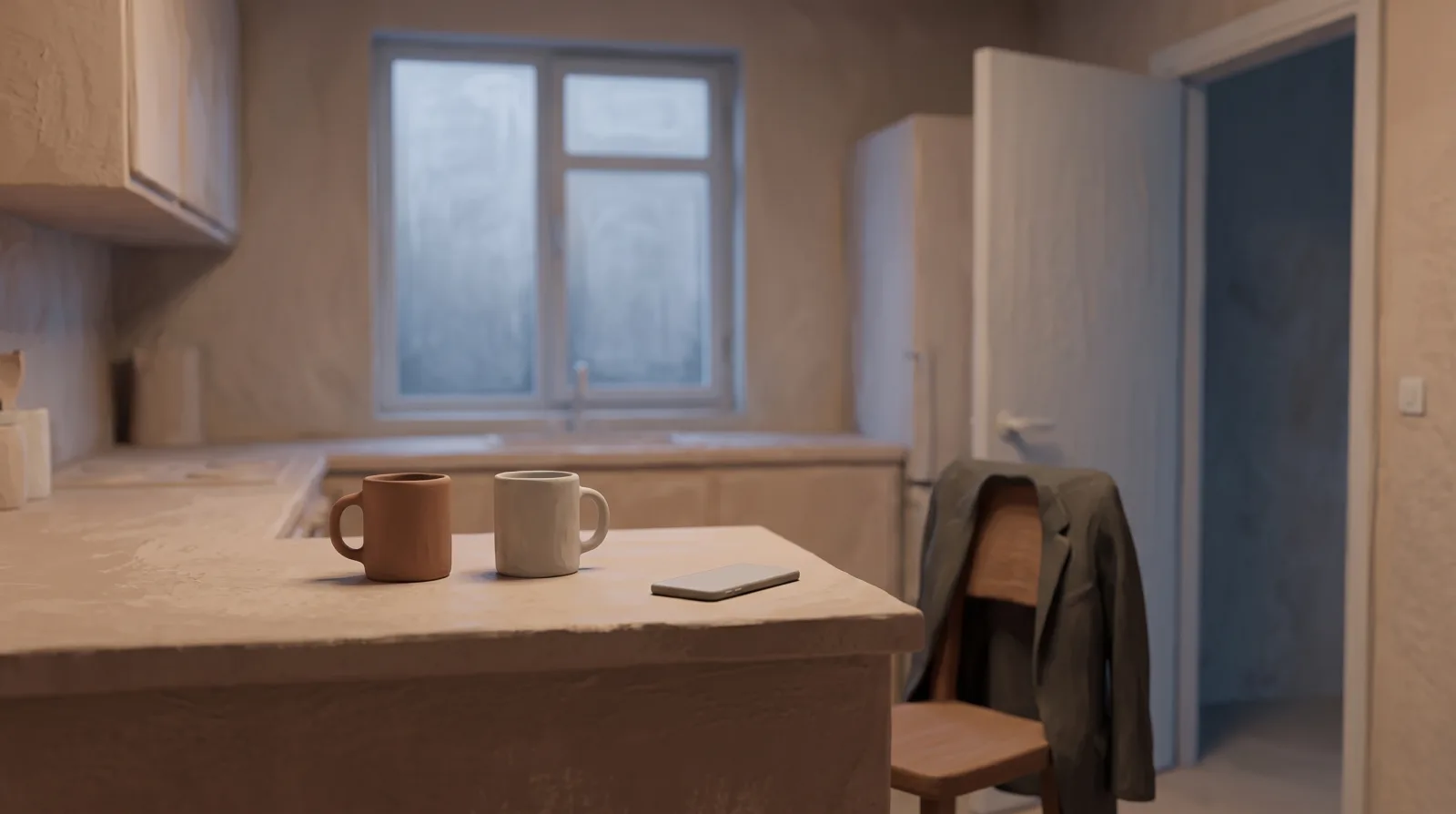
What's happening when you pull back
It isn't that the closeness stopped mattering. It's that it got loud. Somewhere in the middle of being needed, or being close, or just being asked how you feel, something in you flips a switch marked too much, and the switch doesn't ask permission first.
From outside it looks like withdrawal. From inside it's closer to relief — the first real breath you've had in days — followed almost immediately by a low, specific guilt, because you know what it looks like when you go quiet and you know someone is on the other end of it, waiting.
This is the shape an avoidant attachment style tends to take. Not indifference. A nervous system that reads closeness as a demand, and responds to the demand before it responds to the person.
The moment it starts, and how small it usually is
It's rarely a big thing. A text that says 'we should talk about us.' A weekend with too much togetherness in it. Someone saying 'I love you' a beat before you were ready to hear it. The trigger is often smaller than the reaction, which is its own kind of confusing — you can't point to the moment and say that's reasonable, so instead you just feel the retreat happening and go along with it.
Afterward you can usually explain it, if someone asks calmly enough. In the moment, though, there's no explaining. There's just the pull, like a hand on your collar, and the overwhelming preference for a closed door over an open conversation.
Why 'I need space' never quite covers it
Space is the word people reach for because it's the least alarming one available. But space implies a plan — a known amount of time, a known return. What actually happens is closer to disappearing without a stated destination, and not being able to say, honestly, when you'll be back to yourself.
That gap is where the damage happens, more than the distance itself. The person you pulled away from isn't hurt by you needing room. They're hurt by not knowing if the room has a door back in. And you often can't tell them, because you don't know either — you're waiting to feel it, not deciding it.
The part that doesn't get said enough
Here's the harder truth: wanting closeness and needing distance from it aren't in conflict for you. They're the same reflex, arriving in sequence. You can miss someone the moment you've made them leave you alone. That isn't a contradiction to be resolved. It's closer to how the whole thing is built.
People are often told this style comes from being made to be self-sufficient too early — praised for not needing much, not making a fuss, not being a burden. Whether or not that's your history exactly, the pattern rhymes: closeness got coded as risk long before you had words for either.
What it costs the people who love you — and you
The person on the other side of your silence is usually doing something with it that isn't fair to either of you: reading your retreat as a verdict on them. They replay the last conversation looking for the moment they went wrong. Often there wasn't one. The switch flipped on its own weather.
You pay a cost too, quieter but real. You get good at being alone in a way that starts to look chosen, even when it isn't. Relationships end not because you didn't care, but because caring and needing room kept arriving in the wrong order for anyone to keep up with.
What actually shifts it, slowly
Nothing changes this overnight, and anyone telling you otherwise is selling something. What tends to help is smaller and less dramatic: noticing the exact second the pull starts, before you've acted on it. Naming it out loud, even just to yourself — 'this is the retreat, not the truth' — starts to put a half-second of daylight between the urge and the door closing.
Over time, some people find they can stay in the room a little longer than they used to. Not because the urge to leave goes away. Because they've learned, slowly, that it passes — and that leaving isn't the only response available to it.
Questions people ask next
- Is an avoidant attachment style the same as not loving someone?
- No. The pulling away and the caring usually happen at the same time, not instead of each other. What's missing isn't feeling — it's a reliable way of staying close to someone while the urge to retreat is active.
- Why do I want distance right after something good happens?
- Good moments raise the stakes of closeness, and raised stakes are exactly what triggers the pull. It can feel backwards, but the timing makes sense once you see it as a response to intensity, not to the person.
- Can someone with this style still have a lasting relationship?
- Yes, though it usually depends less on the style disappearing and more on both people learning its rhythm — knowing a retreat is coming, and what it does and doesn't mean when it does.
- Why can't I explain the pull-away when it's happening?
- Because the retreat runs ahead of language. By the time you could put words to what you're feeling, you're often already gone quiet, already three steps into the distance you didn't plan to want.