What a fear of abandonment actually feels like
A fear of abandonment isn't waiting for something bad to happen — it's living as though it already has. You feel it before anyone has done anything, which is exactly what makes it so hard to explain to someone else.
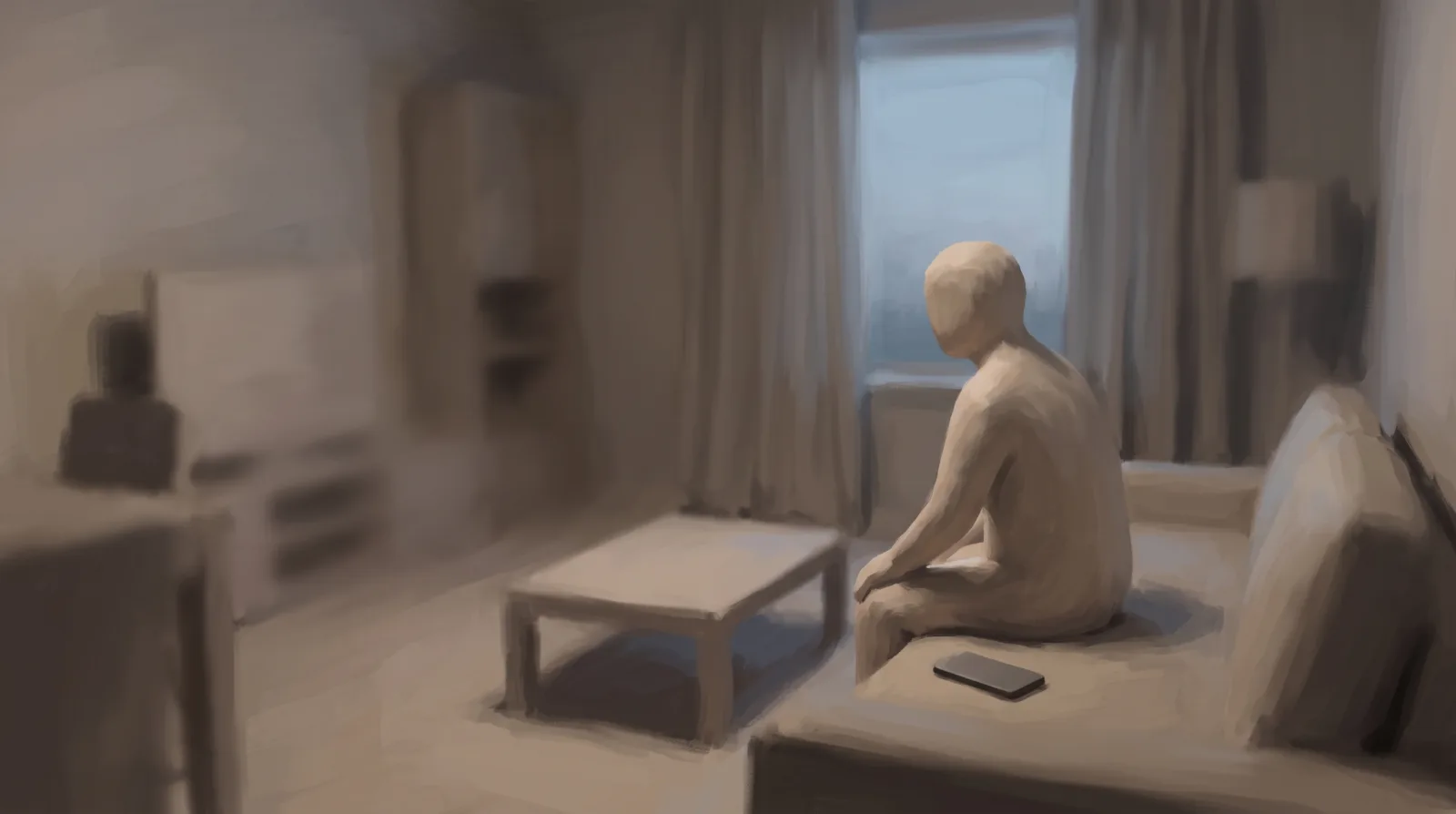
What it is, plainly
A fear of abandonment is the expectation that people leave, running underneath a relationship before there's any sign of it. It doesn't need evidence. A slow reply, a quiet mood, a weekend where someone doesn't call — any of it can trigger the same old certainty: this is the beginning of them going.
It's different from missing someone or being sad they might leave. It's a low, constant readiness for the leaving to start, which means you're often responding to something that hasn't happened yet. You're arguing with a version of the future, and the other person doesn't know they're in the argument.
People who don't carry this find it hard to understand why reassurance doesn't land. It's not that you don't believe them in the moment. It's that the belief doesn't hold — it needs to be given again tomorrow, and the day after that.
Where it usually starts
It rarely starts with the person you're afraid will leave. It starts earlier — with someone who did leave, or who was there in body but not reliably in attention. A parent who came and went unpredictably. A house where affection depended on mood. A friendship that ended without explanation at an age when you had no way to make sense of it.
What gets learned isn't 'people leave.' It's something more specific: closeness is not safe to trust, because the last time it looked steady, it wasn't. That's not a belief you argue yourself out of. It's closer to a habit the body keeps, long after the original situation is over.
This is why the fear can attach to someone who has never once given you a real reason for it. The fear isn't reading them. It's reading an old file, and it applies that file to whoever is standing closest.
What it costs in the present
It costs attention. A lot of your day can go to reading tone in a text, timing a reply so it doesn't seem too eager or too cold, noticing who liked what and who didn't. That's hours spent managing a threat that, on most days, isn't there.
It costs the relationship itself, sometimes. Pulling away first, so you're not the one left. Testing someone to see if they'll stay, which tends to be the thing that eventually makes them tired. Needing a level of reassurance no one can keep supplying forever, not because they don't care, but because the need was never really about them.
And it costs something quieter: the version of you that could just be in a relationship without narrating it. Ordinary affection stops feeling ordinary. It starts feeling like data — evidence to be checked and re-checked for whether it's still there.
The re-read message, the four-hour wait
It shows up in specific, small moments. Reading a message five times for a tone that isn't in it. Watching the clock after you've sent something, timing exactly how long the reply took, and building a case out of the delay. Feeling steady all day and then, at 11pm, suddenly certain something's wrong, for no reason you can point to.
It also shows up as a kind of pre-emptive distance. Not calling first. Not saying what you actually want. Keeping one hand near the door, so that if they go, you can tell yourself you saw it coming — which is its own kind of protection, even though it usually helps bring on the exact thing you were guarding against.
Why reassurance doesn't fix it
Reassurance works on the situation, not on the pattern underneath it. Someone can tell you they're not leaving, mean it completely, and the fear will still be there next week, because it was never really about whether this particular person leaves. It's about whether closeness, in general, can be trusted to hold.
This is the part that tends to get missed. People try to solve the fear by finding someone steady enough to prove it wrong. Sometimes that helps for a while. But the fear usually outlasts any one relationship, because it was built somewhere else, over a longer time, by more than one person.
What tends to help, slowly
Naming the pattern when it's happening, rather than after, changes what you can do with it. Noticing 'this is the old fear, not the current evidence' doesn't remove the fear, but it puts a small gap between the feeling and whatever you'd normally do about it — check the phone, pick a fight, go quiet.
It also helps to look at where the pattern started without turning it into a full explanation for your whole life. The point isn't to blame anyone or to excuse everything. It's to understand that the fear has a source, and the source is old, and old things don't move on their own timeline just because you'd like them to.
Questions people ask next
- Is fear of abandonment the same as attachment style?
- They're closely related but not identical. Attachment style describes a broader pattern in how you relate to closeness — how you seek it, respond to it, or avoid it. Fear of abandonment is one specific expectation inside that pattern: the belief that people will leave. You can have this fear without every part of an anxious attachment style, and it can appear even in people who otherwise seem confident in relationships.
- Can this happen even in a stable relationship?
- Yes, and often does. The fear isn't reading the relationship in front of you — it's reading an older pattern and applying it regardless of how steady the current situation actually is. A partner's consistency can ease it over time, but consistency alone doesn't remove it, because the fear was formed somewhere else, earlier, by someone else.
- Why do I push people away when I'm afraid they'll leave?
- It's often an attempt to control the timing. If leaving feels inevitable, going first — or creating distance before they can — feels safer than waiting for it to happen to you. It doesn't feel like sabotage from the inside. It feels like protection, even though it tends to produce the exact outcome it's trying to avoid.
- Does this ever fully go away?
- It tends to soften rather than disappear on a fixed schedule. The pattern loosens as you get more practice noticing it in the moment, rather than only recognising it afterward. It's less about arriving at a point where the fear is gone and more about the fear having less say in what you do.