How to stop overthinking when your mind won't put the thing down
You've typed "how to stop overthinking" at 1am with the same three sentences replaying, and you already know that just deciding to stop hasn't worked yet. It probably won't.
The short answer, and why it's incomplete
You cannot stop overthinking by telling yourself to stop. That instruction is exactly what's already failing — you've likely given it a hundred times tonight. What actually interrupts a loop is changing something outside the loop: writing the thought down in full instead of running it in fragments, moving your body, or naming out loud what you're actually afraid will happen if you stop checking it.
The loop isn't really about the thing you think it's about. It's about an unfinished feeling underneath it — a decision not made, a message not sent, a fear not looked at directly. Overthinking is what a mind does with a feeling it hasn't been allowed to finish having.
Why the thought keeps coming back
A thought that repeats isn't being stubborn for no reason. It's usually standing in for something you haven't let yourself say plainly, even to yourself — that you're scared of the answer, or that you already know the answer and don't like it. The mind repeats what it hasn't resolved. It doesn't repeat because it's broken.
This is why willpower doesn't touch it. You can't outmuscle a thought that's doing a job. The four-hour wait for a reply, the re-read text, the mental replay of a conversation that already ended — these aren't failures of discipline. They're your attention trying to finish something it was interrupted mid-way through.
What actually breaks the loop, in practice
Writing helps, but not writing about the thought — writing the whole scene. Not "I'm worried about the email" but what the email said, what you're afraid it means, what you'd do if the worst version of it were true. Vague thoughts loop. Specific ones tend to run out of road, because you hit the end of what you actually know and have to stop.
Physical movement changes the channel your attention is on, briefly but genuinely — a walk, changing rooms, washing a dish. It doesn't solve anything. It just gives the loop somewhere else to not be for ten minutes, which is sometimes enough for the next thought to be a slightly different one.
Talking it through out loud, even to no one, does something writing alone doesn't: it forces the thought into a shape with a beginning and an end. Thoughts in your head are shapeless. Said aloud, or written as a full sentence rather than a fragment, they become finite. Finite things can be finished.
The difference between thinking it through and running it again
There's a version of this that looks like thinking but is actually just repetition wearing a disguise. You can tell the difference by whether anything new shows up. If the fortieth pass through the argument produces the same conclusion as the first, you're not thinking — you're rehearsing. If it produces something you hadn't noticed before, that's different.
People who overthink are often trying to reach certainty before they act. But some situations don't have a certain answer waiting to be found by enough thinking. At some point the thinking has done what it can do, and what's left is deciding without the certainty you wanted.
Why late at night is worse
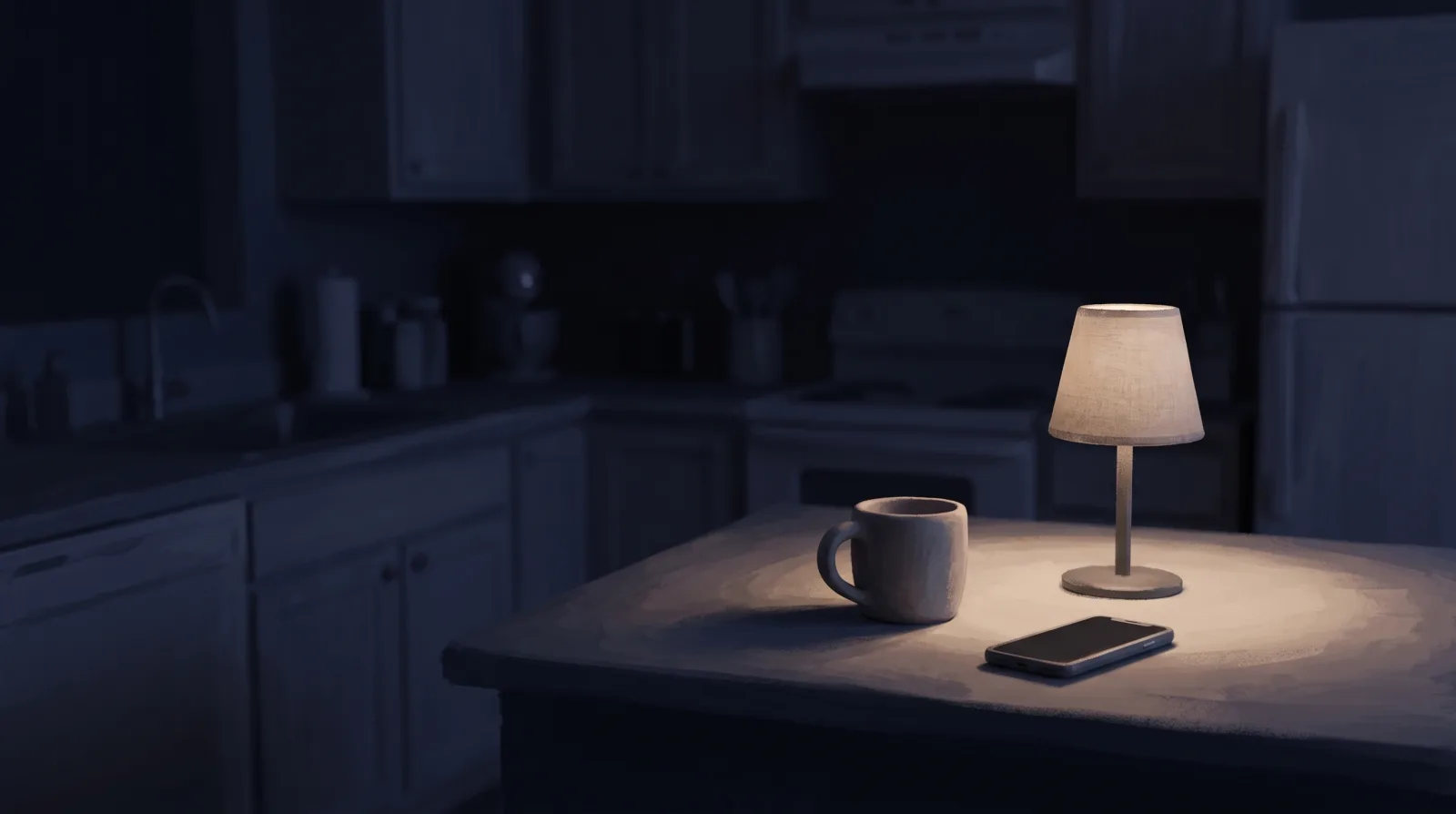
At 2am there's no one to check your fear against, nothing else asking for your attention, and your body is tired in a way that lowers your defenses without lowering the volume of the thought. It isn't that the thought is worse at night. It's that you have fewer distractions from it and less energy to interrupt it.
This is why the loop often loosens in the morning without you doing anything differently — not because the thought got resolved, but because daylight brought other things back into the room with it.
What to do with the specific thought you keep having
Give it somewhere to go that isn't just your own head repeating it back to you. That might be a page, a person, or a walk where you say the sentence out loud once instead of forty times. The point isn't to arrive at peace with it tonight. It's to move it from a loop into something with an edge — a version you've actually looked at, rather than one you keep almost looking at.
Questions people ask next
- Is overthinking the same as anxiety?
- They overlap but aren't identical. Overthinking is a pattern of repeated, circling thought — anxiety is a broader state that can produce it, but plenty of overthinking happens around ordinary decisions with no fear attached, just an unfinished feeling looking for resolution.
- Why does writing it down help more than just thinking about it?
- Thinking lets a thought stay vague and repeat in fragments. Writing forces it into full sentences with a beginning and an end, which tends to reveal what you actually know and don't know — and a thought that's run its course is easier to put down.
- Why do I overthink more when I'm tired?
- Tiredness lowers your ability to distract yourself or reason your way past a thought, so the same thought gets more air time. It isn't that tired minds think worse — they just have less to compete with the loop.
- Can you ever fully stop a thought from coming back?
- Not usually by deciding to. What changes is how much room it takes up — a thought that once filled a whole evening can shrink to a passing flicker once whatever it was standing in for gets looked at directly.