What mom burnout actually is, and why sleep doesn't fix it
You searched this mid-feeling, probably at the end of a day that had no end. Mom burnout isn't a lack of rest. It's the particular exhaustion of being the only available person, over and over, with no stretch of time that is only yours.
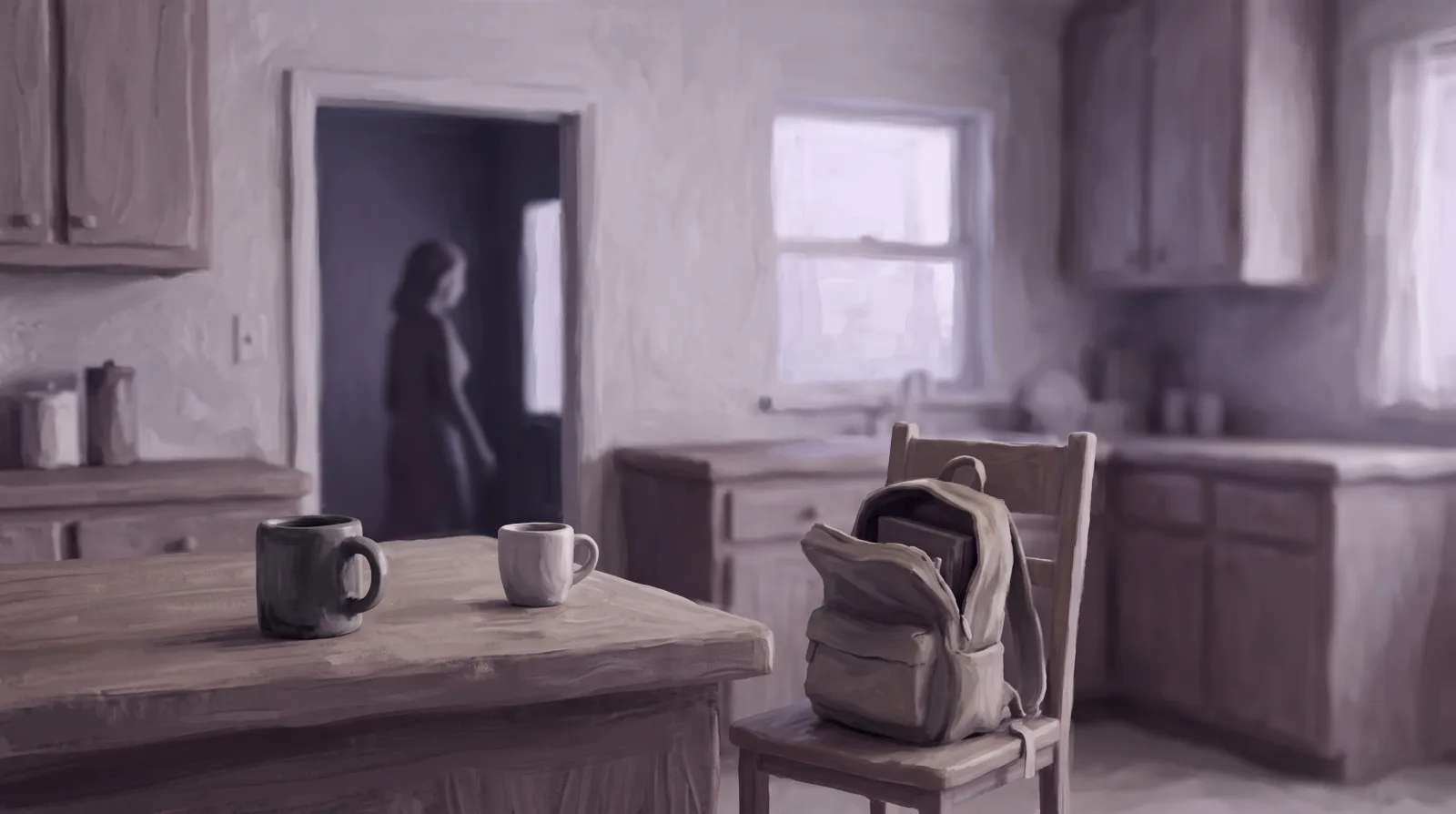
What it actually is
Mom burnout is not the same as being tired. Tired goes away with a nap, a weekend, a good night's sleep. This doesn't. You can sleep eight hours and wake up already behind, already being asked for something before your feet hit the floor.
What's actually happening is a kind of depletion that comes from continuous availability. Not from any single hard task, but from never being off duty. Your attention is always partly somewhere else — on the next thing, the thing you forgot, the small person who might need you in the next four minutes. That split never fully closes, even in sleep.
The word for this used to just be motherhood, and people shrugged. But there's a difference between the normal demands of raising a person and the specific flatness that sets in when the demands never pause long enough for you to recover between them. That flatness is what people mean when they say mom burnout.
The moment you notice it
It usually shows up small. You snap at a request you'd normally handle without thinking. You stand in the kitchen and can't remember what you walked in for. You cry at something minor — a spilled cup, a whined complaint — because it's the one drop that finally overflows a cup that's been full for months.
Some days you go through the motions of the whole routine — lunches, drop-off, dinner, bath, bed — and afterward you can't recall doing any of it. Not because you weren't there. Because you were running on the part of you that doesn't need to be present to function.
Why it isn't about doing less
The obvious advice is to lighten the load — get help, say no, delegate. Sometimes that's true and sometimes it's just not available: there's no one else, or the help that exists doesn't touch the part that's actually worn down.
Because the load isn't only the tasks. It's the fact that you're the one who's supposed to notice everything — who's out of clean socks, who seems off today, whose feelings need managing before your own do. That noticing doesn't stop when someone else takes over the laundry. It's a kind of attention that doesn't have an off switch, and it's the attention itself, not the chores, that runs a person down.
What tends to feed it without you seeing
A lot of it is invisible even to you. The mental list of everyone's schedules. The low hum of guessing what mood someone will wake up in. The habit of checking on a child even when nothing is wrong, because checking has become the resting state of your mind rather than something you decide to do.
There's also the piece nobody names: the loss of any hour that's unaccounted for. Even your own rest gets scheduled, watched, timed against someone else's nap or bedtime. When every hour belongs partly to another person, the mind doesn't get the kind of stillness it needs to reset. That absence compounds. It's quiet until it isn't.
What doesn't actually touch it
A bath doesn't touch it. A day off doesn't touch it, not really, because you spend it bracing for the return. These things aren't useless, but they're aimed at tiredness, and mom burnout isn't tiredness. It's closer to a slow erosion of the sense that any part of the day belongs to you.
People are sold a version of this where the fix is a product — a ritual, an app, a candle — and for an evening it might feel like something. Then the next morning starts the same way it always does, and the thing that was supposedly addressed is still sitting there, untouched, because it was never really about the bath.
What it looks like to actually look at it
Naming it precisely tends to matter more than people expect. Not as a fix, but as a way of no longer mistaking it for a personal failing — for not being grateful enough, or organized enough, or patient enough. It's a pattern with a mechanism, not a verdict on how you're doing this.
Looking at it closely means being specific about where the depletion actually lives — which hours, which demands, which kind of noticing costs you the most — rather than reaching for a general sense that everything is a lot. That specificity is slow to build. It's also the only way anything shifts.
Questions people ask next
- Is mom burnout the same as postpartum depression?
- No, and they're worth telling apart. Mom burnout describes ongoing depletion from constant caretaking, often years into parenting, not a distinct period after birth. If what you're feeling includes a persistent flatness, a loss of interest in most things, or thoughts that worry you, that's a different situation and worth taking to a doctor rather than reading about here.
- Why do I feel this even though I love being a mom?
- Those two things aren't in conflict. Depletion is about the structure of your days — constant availability, no unaccounted hours — not about how you feel toward your child. Loving someone doesn't exempt you from being worn down by the shape of caring for them.
- Will this go away once my kids are older?
- The specific tasks change with age, but the underlying pattern — being the one who notices, who's on call, who absorbs everyone's mood — often just moves into a new form. It's less about waiting it out and more about understanding what's actually costing you, which tends to matter at any age of parenting.
- Why doesn't a day to myself actually help?
- A day off addresses tiredness, not the deeper pattern of split attention and constant availability. Most people spend that day partly bracing for the return to it, which keeps the underlying strain running even while the tasks themselves are paused.